How to Get the Best from Embossed Labels: 5 Expert Tips
Share
Embossing is one of the most effective ways to make a label feel premium. A raised logo or brand name catches the light, invites customers to pick up the product, and signals quality before they've read a word.
It also plays with the senses. Shoppers find it almost impossible not to run a thumb over an embossed area. That moment of touch adds one more sensory link between your product and their sense of quality, so the label is felt as well as seen.
But a great emboss doesn't happen by accident. The material, the artwork and the shape of the emboss all affect how high, crisp and consistent the finished result will be. Get them right and the emboss becomes the detail people remember. Get them wrong and it can look flat or even tear the paper.
How does embossing work?
An emboss is created with a matched pair of metal tools: a die and a counterforce. The label material passes between them and is pressed into shape. This breaks and compresses the paper fibres, so the selected areas rise above the rest of the design.
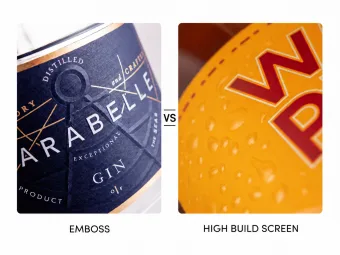
Because the material itself is reshaped, embossing gives a label real physical structure. If you're deciding between embossing and a raised varnish, our guide to embossed labels vs high-build screen explains the differences.
Here are five tips to help you get it right first time:
1. Less is more
Less is more. Choose the single most important part of your label, whether that's the logo, brand name or product name, and make that emboss exceptional. Embossing should be like a light dab of fine perfume, not a whole bottle at the school disco.
When everything is raised, nothing stands out. A single, well-placed emboss draws the eye, and the fingertips, exactly where you want them. If you do want more than one raised element, a multi-level emboss can create a clear hierarchy, for example by giving your logo more height than the text around it.
2. Material matters
The best embossing papers are thick, soft and full of air. The die breaks some of the fibres and crushes out the air where we want the design to rise, so the more bulk in the paper, the higher the emboss. Thicker and textured stocks also add their own character to the finished label.
Embossing works on paper-based materials only. Plastic films are elastic and tend to spring back towards their original flat form, so they can't hold an emboss. If your label needs to be on film, high-build varnish is usually the better way to add raised detail.
Pro tip: if your bottling or application process allows, consider a plastic liner. When we push an emboss to its maximum height, there's a chance the paper could tear. A plastic liner adds integrity, so we can go further and achieve more height. Always check with your bottler first to make sure it suits their equipment.
3. Width drives height
Embossing uses a female die and a male counterforce that pushes the material into it. Two things limit the height: the length of the paper fibres (too short and they tear) and the width of the narrowest part of the design. The emboss can't rise higher than that width, so keep fine lines and small text clear of deep embossing.
If your design combines bold shapes with fine details, consider separating them onto different dies. Each element can then be embossed at its best height, so delicate details stay crisp and bold areas make a statement.
Balance matters too. Aim for a ratio of raised to recessed areas as close to 50/50 as possible. That even distribution gives structure, clarity and consistency across the whole reel. Our design tolerance video explains this in more detail.
4. Embossing has many flavours
When people think of embossing, many picture the classic square-edged emboss. But the shape of the emboss, known as its profile, can be adjusted to create very different effects:
- Single-level emboss: Square sides and a flat top. It's the most common style and the most striking under the fingertips.
- Rounded or pillow emboss: Soft, curved edges that play beautifully with reflected light.
- Rooftop or faceted emboss: Two angled sides meeting at a ridge. Light bounces off each side, giving a strong impression of height.
- Bevelled emboss: Angled edges with a strong, flat top surface.
- Multi-level emboss: Different heights within one design, ideal for creating hierarchy.
Shaped profiles are gentler on the paper fibres than a square-edged emboss, and softened edges give a taller, more structured finish. Debossing works the same way in reverse, pressing artwork into the label. A bevelled deboss uses light and shade to draw attention and invite touch.
You can see each of these styles up close in our Tips & Tricks video, Mastering the Art of Embossed Labels.
5. Make your finishes work together
Embossing is often at its best when it shares the spotlight with another finish, but the two need to work as a team rather than compete for attention. The simplest approach is to layer finishes on the same hero element. Embossing a foiled logo or brand name, for example, lifts the metallic detail so it catches the light from every angle.
Contrast works well too. A softly rounded emboss on the brand name, set against a debossed background, creates depth without adding any more colour to the design. And if foil isn't the right fit, digital metallics can do a similar job. On our premium whisky label for Penderyn Badwolf, digital gold toner combined with a pillow emboss gives a rich, foil-like finish.
Whichever combination you choose, keep the "less is more" rule in mind. One or two well-chosen finishes will always feel more premium than every effect on the same label.
Let's make your brand stand out to the touch
At Label Apeel, we specialise in premium embossed label printing, and we help you get every detail right, from choosing the right material and emboss profile to making sure your labels are ready for the production line. Our studio team reviews your artwork before any tooling is made, so your emboss comes out crisp and consistent across the whole run. To see and feel the difference embossing can make, request a portfolio and explore our samples up close.
Request a Quote
Tell us a little about your label requirements and our team will prepare a tailored quote. If we need any extra information, we’ll be in touch before sending it over.